MinkeDeepSeek Harness plugin
🐳 DeepSeek Harness Desktop
- Stars
- 606
- Forks
- 65
- License
- Apache-2.0
- Last commit
- Sep 3, 2026
- Latest release
- v0.4.0
Overview
🐳 DeepSeek Harness Desktop
Original README
Cached from the project repository on Sep 3, 2026. This is source content, separate from the Agents.md review above.

Minke
A native desktop workspace for DeepSeek Harness
English · 简体中文




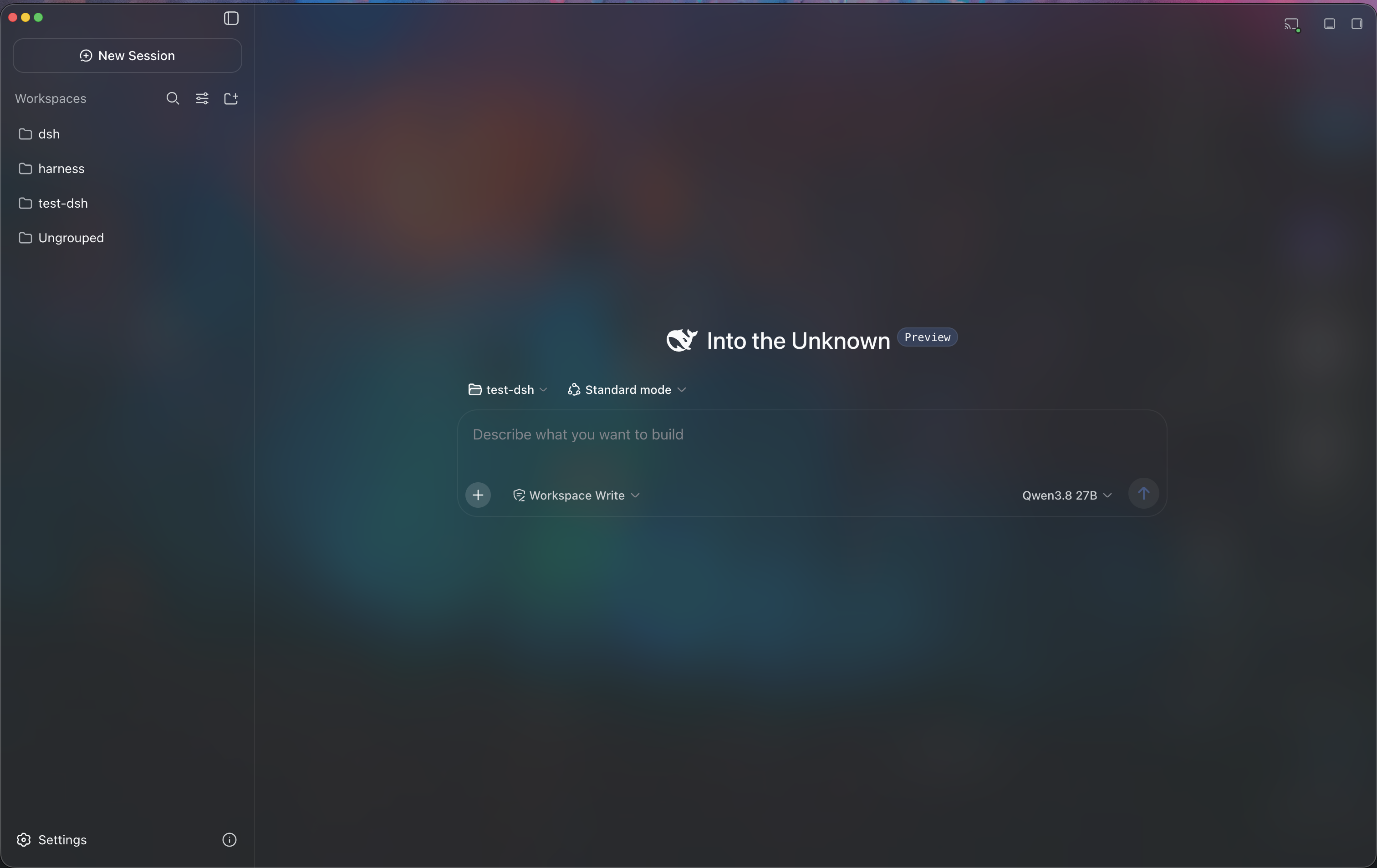
Minke brings DeepSeek Harness to the desktop as a focused, local-first workspace for agentic work. Conversations, project files, terminals, web tools, and native desktop actions stay within reach—without fragmenting your workflow across multiple apps.
[!IMPORTANT] Minke is under active development. Features, packaging, and the local data schema may change as the project evolves. Minke is an independent community project, not an official DeepSeek product.
Highlights
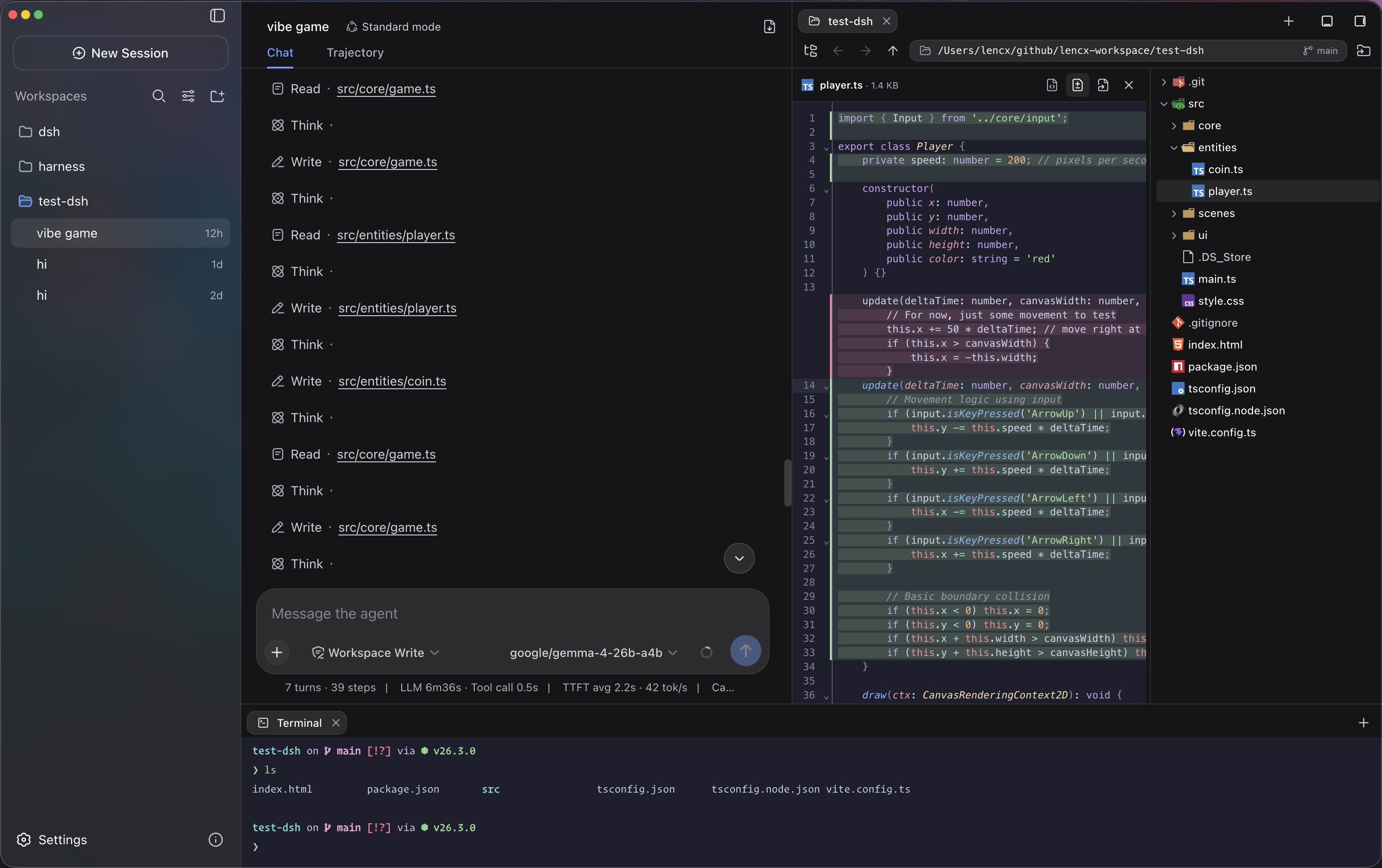
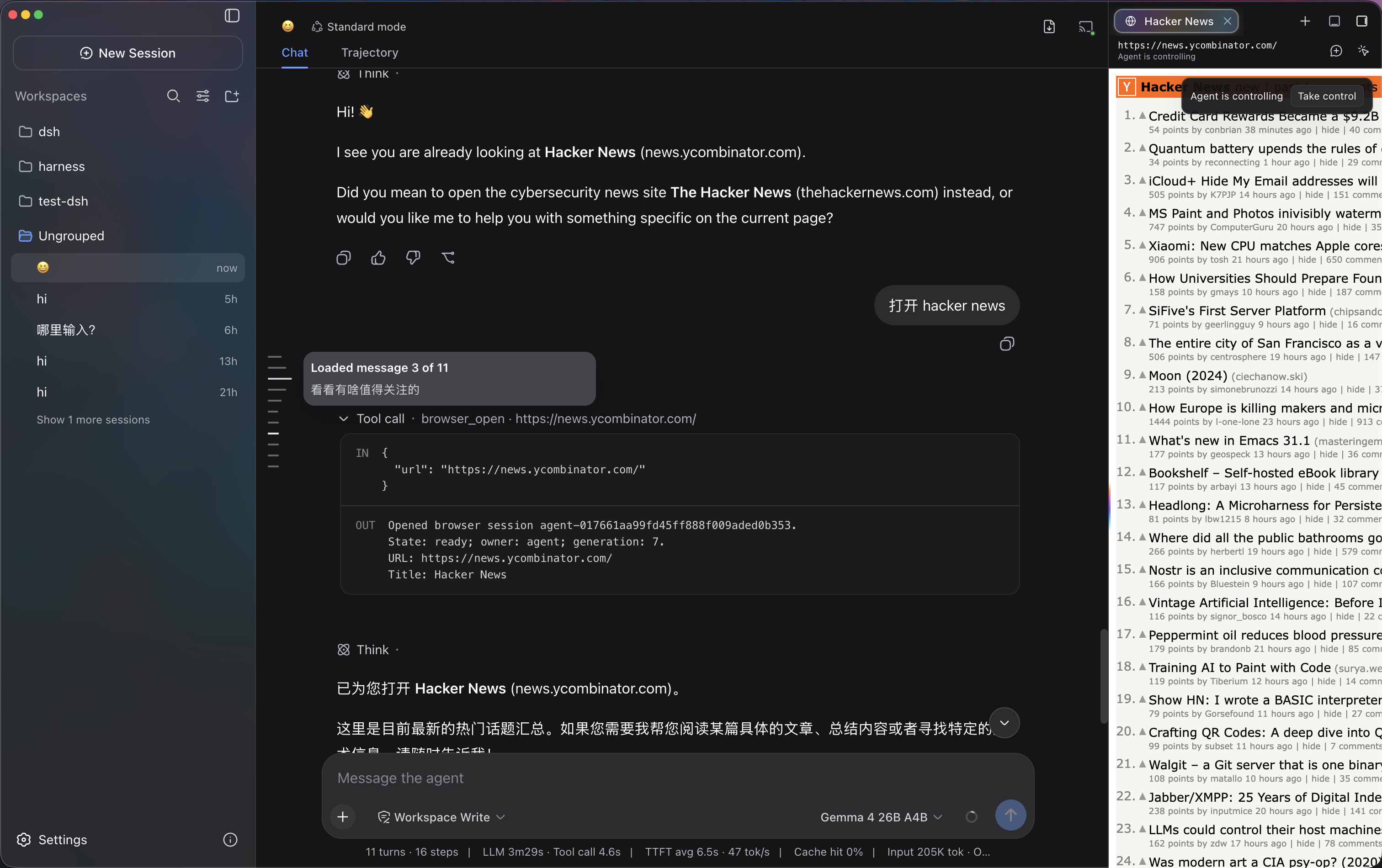
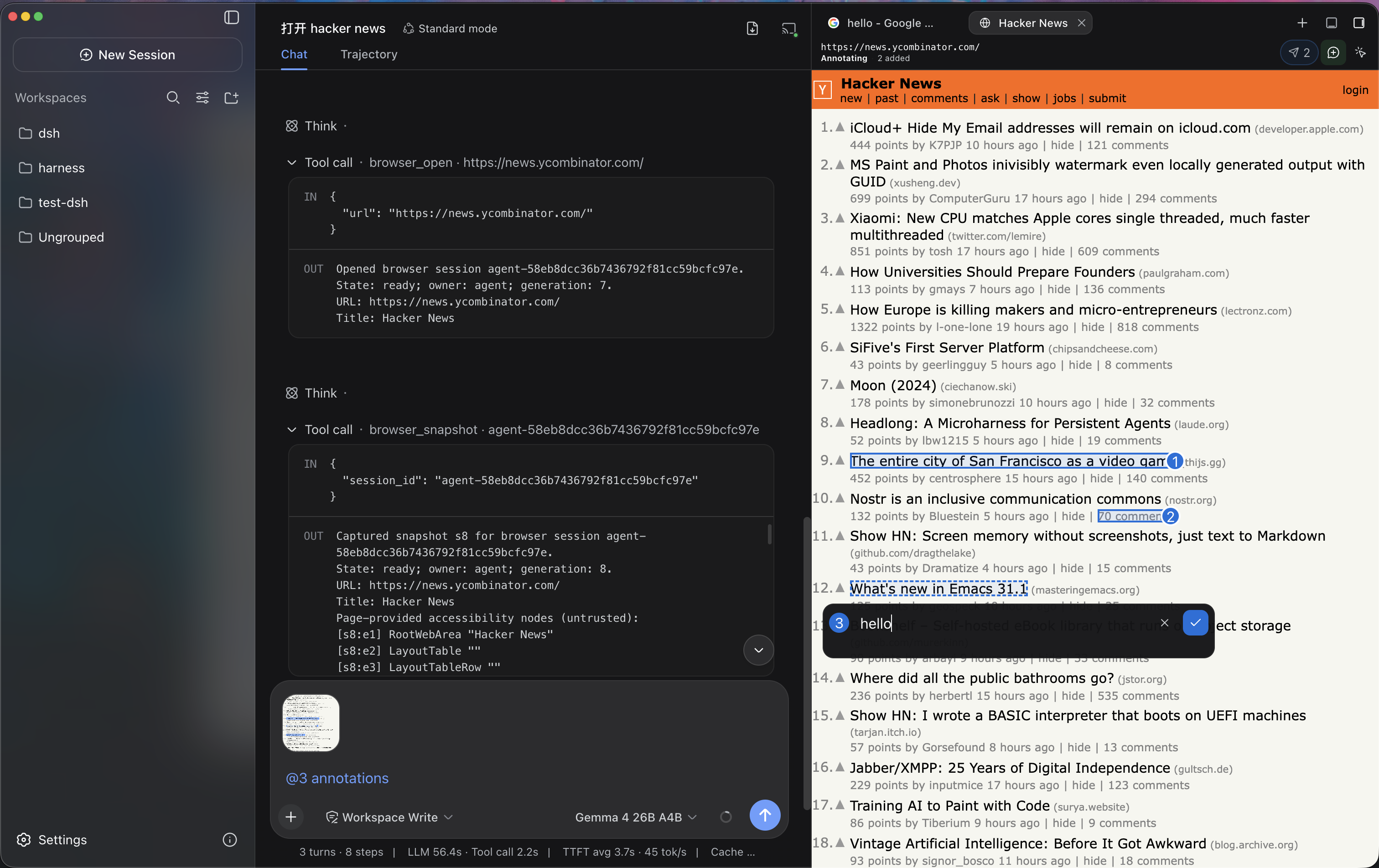
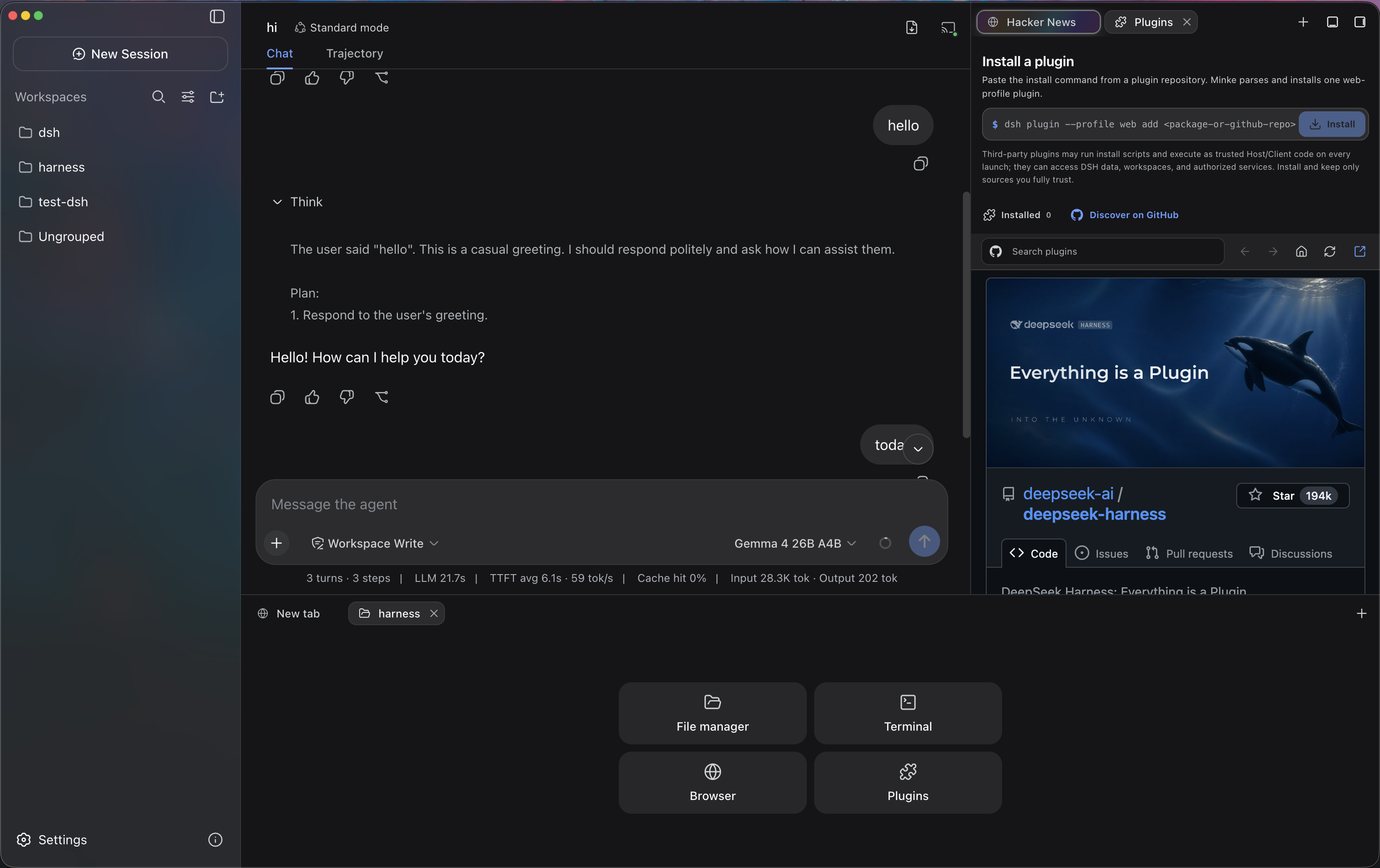
Minke combines agentic browsing, local tools, remote access, and native desktop controls in one focused workspace.
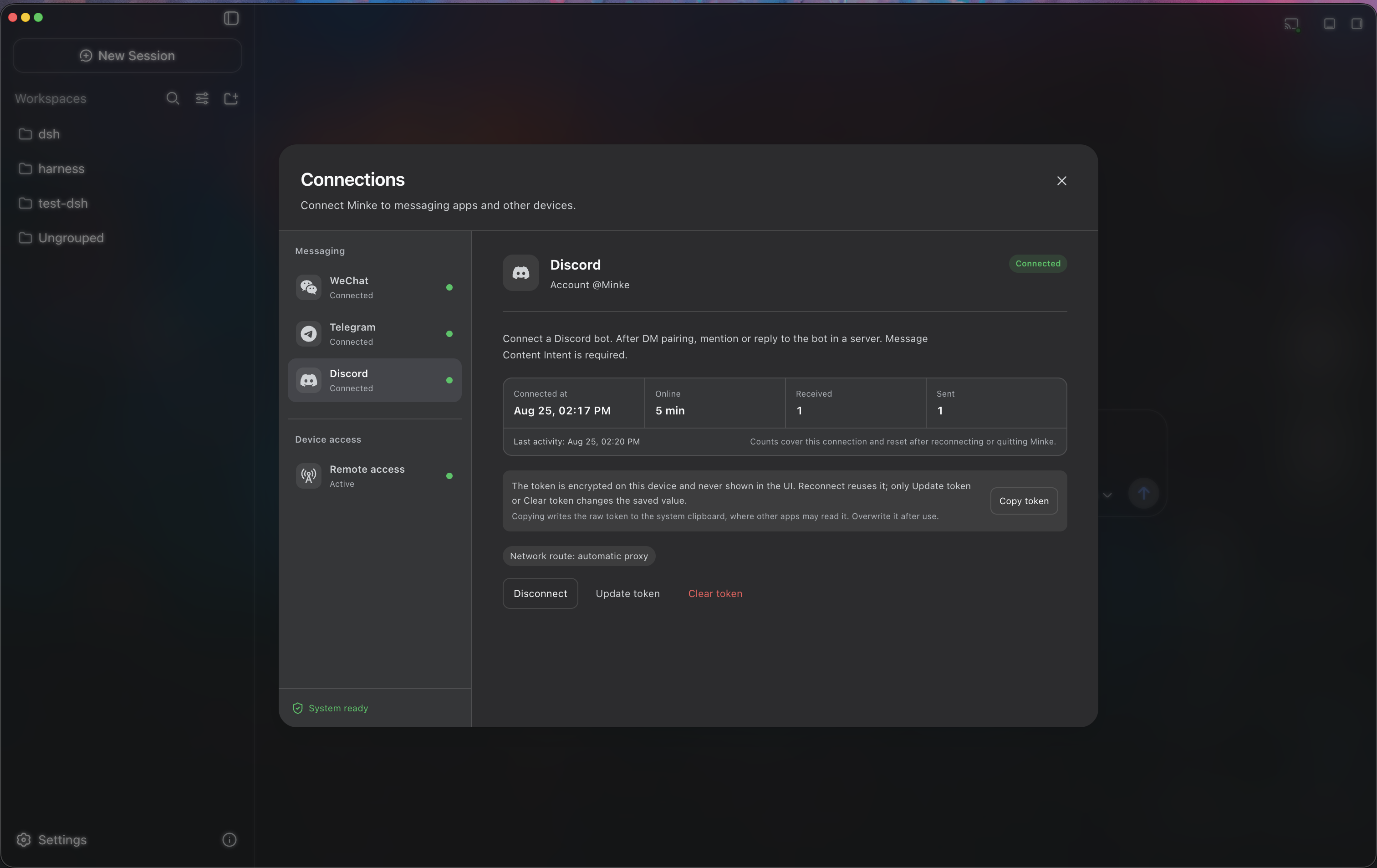
- Agent Browser with shared control — Agents can search, open, and interact with the Web in visible browser tabs. Take control of a live tab without closing it, hand it back when ready, or send annotated page context to the conversation.
- A complete desktop workspace — Right and bottom panels keep Files, Terminal, Browser, Browser History, and Plugins beside the conversation, with native menus and customizable shortcuts for quick access.
- Local-first by design — Sessions, settings, Browser History, and browser session data remain on your machine.
- Remote access where you already work — Continue tasks from a responsive Web workspace or through WeChat, Telegram, and Discord, with private access options built around Tailscale and Cloudflare.
- Local model support — Discover and connect to LM Studio, Ollama, and other loopback OpenAI-compatible services without giving up control of services you already run.
- Cross-platform desktop support — Minke supports macOS, Windows, and Linux with native desktop integration, built-in updates, synchronized themes, and English and Chinese UI.
 |  |
 |  |
 |  |
Remote access from another device
Minke remote access is a responsive Web client backed by Minke Host—not a video stream or touch-controlled projection of the Electron window. From a phone you can continue conversations, start agent tasks, manage project files, and use a terminal that runs on the Minke computer.
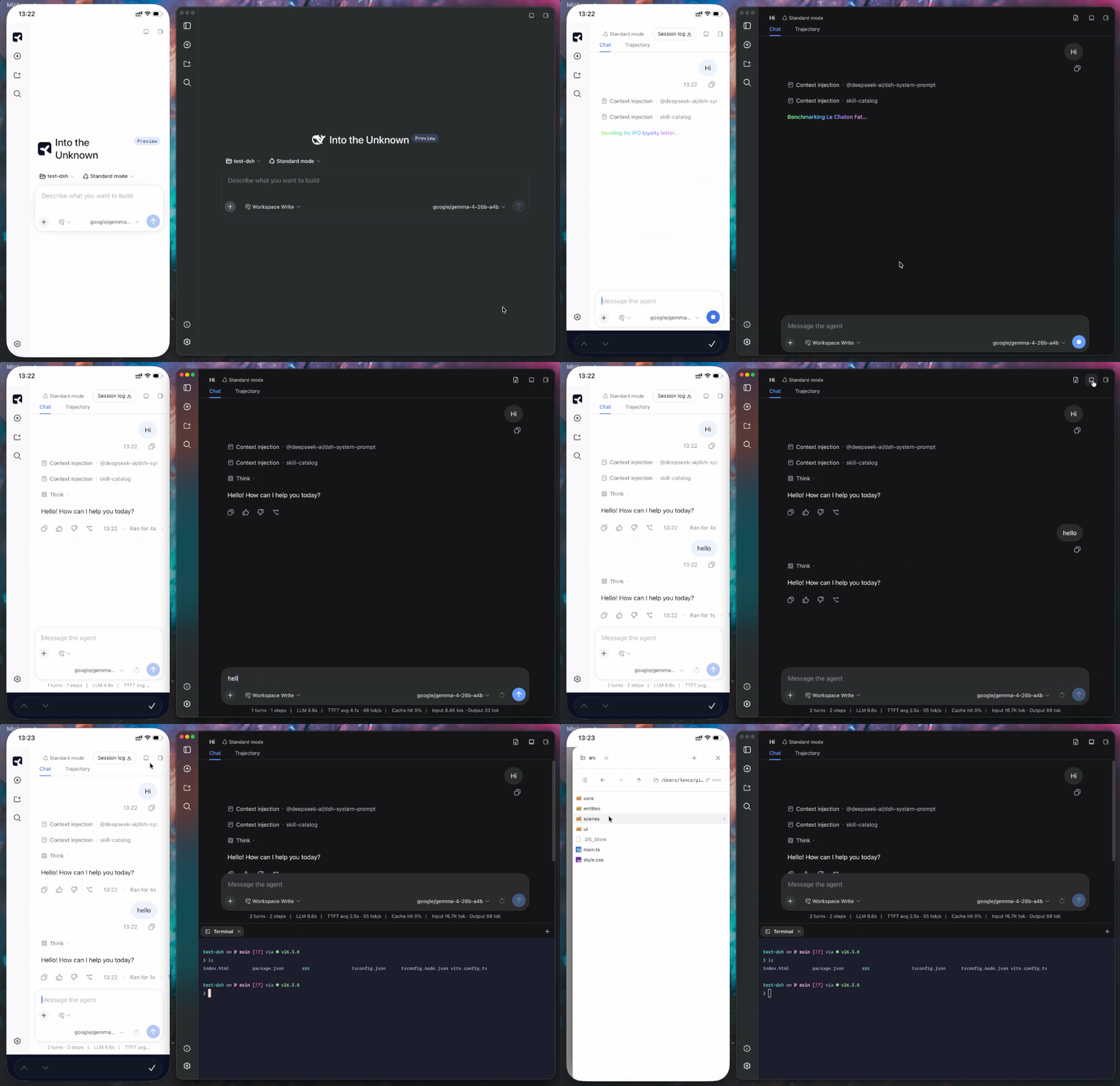
[!NOTE] Tailscale Serve over HTTPS, Tailscale Direct IP, and Cloudflare Access have all completed end-to-end regression testing and are currently available.
- Tailscale Serve over HTTPS (recommended) — Best for devices already joined to the same tailnet. It provides a secure HTTPS address and supports PWA installation.
- Tailscale Direct IP (advanced) — Binds only to the current device's Tailscale IPv4. Traffic remains end-to-end encrypted by Tailscale, but the address uses HTTP and is not a browser secure context.
- Cloudflare Access — Exposes a named tunnel protected by an identity policy, without requiring Tailscale on the phone. It requires a configured Cloudflare Tunnel, Access application, and an explicit allow policy.
Recommended setup: Tailscale Serve
Minke can expose its Web UI privately through Tailscale Serve. It keeps Harness on the local loopback address, does not bind it to the LAN, and does not enable the public Tailscale Funnel.
- Install Tailscale on the Minke computer and the phone, sign both into the same tailnet, and confirm the computer is connected.
- In Minke, open Connections → Device access → Remote access, select HTTPS Serve, and enable remote access. Minke connects in the background; no restart is required.
- Copy or open the displayed
https://…ts.netaddress on the phone.
Install as a PWA
Open a Tailscale Serve or Cloudflare Access HTTPS address, choose Install Minke in the sidebar, and accept the browser install prompt. On iPhone or iPad, use Share → Add to Home Screen. The installed app launches in standalone mode; when connectivity is poor it shows connection or offline feedback instead of silently presenting cached workspace content.
Minke activates only one remote route at a time, owns its foreground proxy while the app is running, and stops it on exit. The remote page can start agent tasks and use local tools already authorized in Minke, so grant access only to trusted tailnet members or Cloudflare Access identities.
Installation
Download Minke only from the official GitHub Releases page. The links below always point to the latest stable release.
| Platform | Architecture | Package |
|---|---|---|
| macOS | Apple Silicon (arm64) | Download .dmg |
| macOS | Intel (x64) | Download .dmg |
| Windows | x64 | Download .exe |
| Linux | Debian / Ubuntu (x64) | Download .deb |
| Linux | Fedora / RHEL (x64) | Download .rpm |
| Linux | x64 (portable AppImage) | Download .AppImage |
Release checksums are available in SHA256SUMS.
Packaged macOS, Windows, and Linux builds check for stable updates automatically. Minke selects the fixed DMG, EXE, DEB, RPM, or AppImage asset for the running system, verifies the immutable GitHub Release, URL chain, exact size, SHA-256 digest, and available OS provenance marker, then asks before opening it. Disable background downloads under Settings → Minke → Preferences → Software updates to require a Download update confirmation first, or use About Minke → Check for updates at any time. Installation always remains explicit. See desktop application updates for the user flow and platform behavior.
macOS
-
Download the
.dmgfile and open it. -
Drag
Minke.appinto the Applications folder. -
Current pre-release builds are not notarized. First try Apple's Open Anyway flow under System Settings → Privacy & Security.
-
If you explicitly accept the risk and the system flow is unavailable, remove quarantine only from the exact installed app:
bashxattr -dr com.apple.quarantine "/Applications/Minke.app" -
Open Minke from the Applications folder.
[!CAUTION] Removing the quarantine attribute bypasses a macOS security check. Minke's updater never runs this command automatically. Use it only as a last resort for
Minke.appdownloaded from the official Releases page, and never replace the path with a broad directory.
Authorize credential storage on macOS
Minke requests Keychain access only after you open Connections and click Authorize credential access. If macOS prompts, enter your Mac login password and choose Always Allow. If access is denied, click Request authorization again.
If credential storage remains unavailable, one possible cause is an invalid or modified app signature that prevents macOS from recognizing Minke's Keychain identity. Verify the application:
bashcodesign --verify --deep --strict --verbose=2 "/Applications/Minke.app"
If verification fails for an older pre-release build that you trust and reinstalling is not practical, quit Minke completely, then repair and reopen it:
bash/usr/bin/codesign --force --deep --sign - --timestamp=none "/Applications/Minke.app" \
  && /usr/bin/codesign --verify --deep --strict --verbose=2 "/Applications/Minke.app" \
  && /usr/bin/open "/Applications/Minke.app"
[!WARNING] Re-signing replaces the installed app's signature. Do not run this command on a valid Developer ID-signed and notarized release; reinstall the official build instead. Do not delete
~/.minke/secretsor the Minke Safe Storage item because existing channel credentials depend on them.
Windows
- Download the Windows x64
.exeinstaller. - Run the installer and follow the on-screen instructions.
- Windows may show a reputation-based warning for a new pre-release build. Continue only after confirming that the installer came from the official Minke Releases page.
Linux
Download the package for your distribution, then open it with your graphical package manager or install it from a terminal.
Debian / Ubuntu:
bashsudo apt install "/path/to/minke-package.deb"
Fedora / RHEL:
bashsudo dnf install "/path/to/minke-package.rpm"
Replace the example path with the downloaded package path.
Build from source
Build Minke on the same operating system and CPU architecture as the package you need. The build produces distributables for the current host under out/make; this project does not support cross-platform packaging from a single host.
Prerequisites:
- Git with submodule support. The
vendor/deepseek-harnesssubmodule must be checked out. - Node.js 24 or newer.
- pnpm 11.7.0, with the repository dependencies installed before running the scripts.
- macOS: an Apple Silicon or Intel Mac with Xcode Command Line Tools. The
.dmgtarget can only be built on macOS. - Windows: a Windows x64 host. Visual Studio 2022 Build Tools with the Desktop development with C++ workload may be needed if a native dependency must be compiled locally.
- Linux: a Linux x64 host with a native build toolchain,
fakeroot,dpkg, and eitherrpmorrpm-build.
On a fresh checkout, first install the repository dependencies, then prepare the Harness runtime:
bashpnpm run harness:stage
This command installs and builds the pinned DeepSeek Harness source, then stages the reusable desktop runtime under runtime/host. Run it after a fresh checkout, or whenever the pinned Harness source or runtime contract changes.
Start Minke in development mode with:
bashpnpm start
pnpm start refreshes the Minke integration in the prepared runtime and launches the development app.
Create the distributable package for the current platform with:
bashpnpm make
pnpm make performs a full runtime stage again before writing the platform package to out/make.
macOS Keychain identifies an app by its code signature. The default local
package uses an ad-hoc signature and may be treated as a new app whenever its
contents change; stable authorization across versions requires the same valid
signing certificate. Find an installed identity with
security find-identity -v -p codesigning, then provide it to the packaging
process:
bashMINKE_MACOS_SIGN_IDENTITY="Developer ID Application: …" pnpm make
Set MINKE_MACOS_SIGN_KEYCHAIN as well when CI uses a dedicated keychain.
Never commit the certificate private key or keychain password.
中国用户
如在使用中遇到问题,或希望进一步交流 Minke,可关注公众号「浮之静」,发送 dsh 获取进群码。也欢迎大家贡献 PR 或分享给更多朋友,您的每一次 Star 都是对开源项目的巨大支持,感恩。